Home / Blogs / Used CNC Horizontal Machining Centers: What Buyers Need to Know Before Shopping

Used CNC Horizontal Machining Centers: What Buyers Need to Know Before Shopping

You’re looking at horizontal machining centers because you need to run high-volume production with minimal operator intervention. Maybe you’re machining engine blocks, transmission housings, or complex aerospace parts that require four-sided access. Used CNC horizontal machining centers deliver the automation and pallet-changing capability you need without the $300,000+ price tag of buying new.
Why Horizontal Machining Centers Command Higher Prices

Even on the used market, horizontal machining centers typically cost 40-60% more than comparable vertical machining centers. That premium exists for good reason.

The horizontal spindle orientation lets you machine multiple faces without repositioning the part. Most HMCs come with automatic pallet changers—often dual or even quad pallet systems. While the machine runs one part, you’re loading the next one. That’s where the ROI lives for high-volume shops.

The tooling capacity also runs deeper. Where a VMC might hold 20-40 tools, it’s common to see horizontal machining centers with 60, 80, or even 120-tool magazines. You can run entire part families without stopping for tool changes.

What to Look for in a Used Horizontal Machining Center

Spindle condition matters more than cosmetics. Ask for spindle hour logs and recent vibration analysis reports. A spindle rebuild on a 40-taper horizontal can run $15,000-25,000, so you want to know what you’re getting into.

Check the pallet changer mechanism carefully. These systems take a beating in production environments. Look for:

  • Smooth pallet indexing with no hesitation or binding
  • Clean shuttle rails without scoring or excessive wear
  • Properly functioning pallet clamps and locating pins
  • Recent maintenance records on hydraulic systems
  • Control panel diagnostics showing no recurring alarms

The control system age affects parts availability and programmer familiarity. A Fanuc 18i or 31i control from the mid-2000s still has good support and plenty of qualified operators who know it. Older proprietary controls can be harder to service.

Matching Machine Size to Your Production Needs

Don’t overbuy on table size unless you’re certain you’ll use it. A 500mm pallet machine costs significantly less than a 630mm or 800mm model—both to purchase and to operate.

Think about your typical part envelope. If you’re running transmission cases that fit comfortably on a 500mm tombstone, stepping up to a 630mm machine just adds floor space requirements and higher tooling costs. The larger machines also consume more power and often need beefier foundations.

Spindle taper follows a similar logic. Most general machining shops do fine with a 40-taper horizontal. You’ll find better inventory availability and lower tooling costs. The 50-taper machines make sense when you’re doing heavy interrupted cuts or need serious rigidity for hard materials.

Common Mistakes When Buying Used HMCs

First-time horizontal buyers often underestimate the tooling investment. You’ll need tombstones, fixture plates, and a deeper tool crib than you’re used to with verticals. Budget an extra $20,000-40,000 for proper workholding and tooling to actually use the machine effectively.

Rigging and installation costs also surprise people. These machines weigh 15,000-30,000 pounds and need careful leveling. Factor in $5,000-12,000 for professional machinery moving, depending on your location and floor conditions.

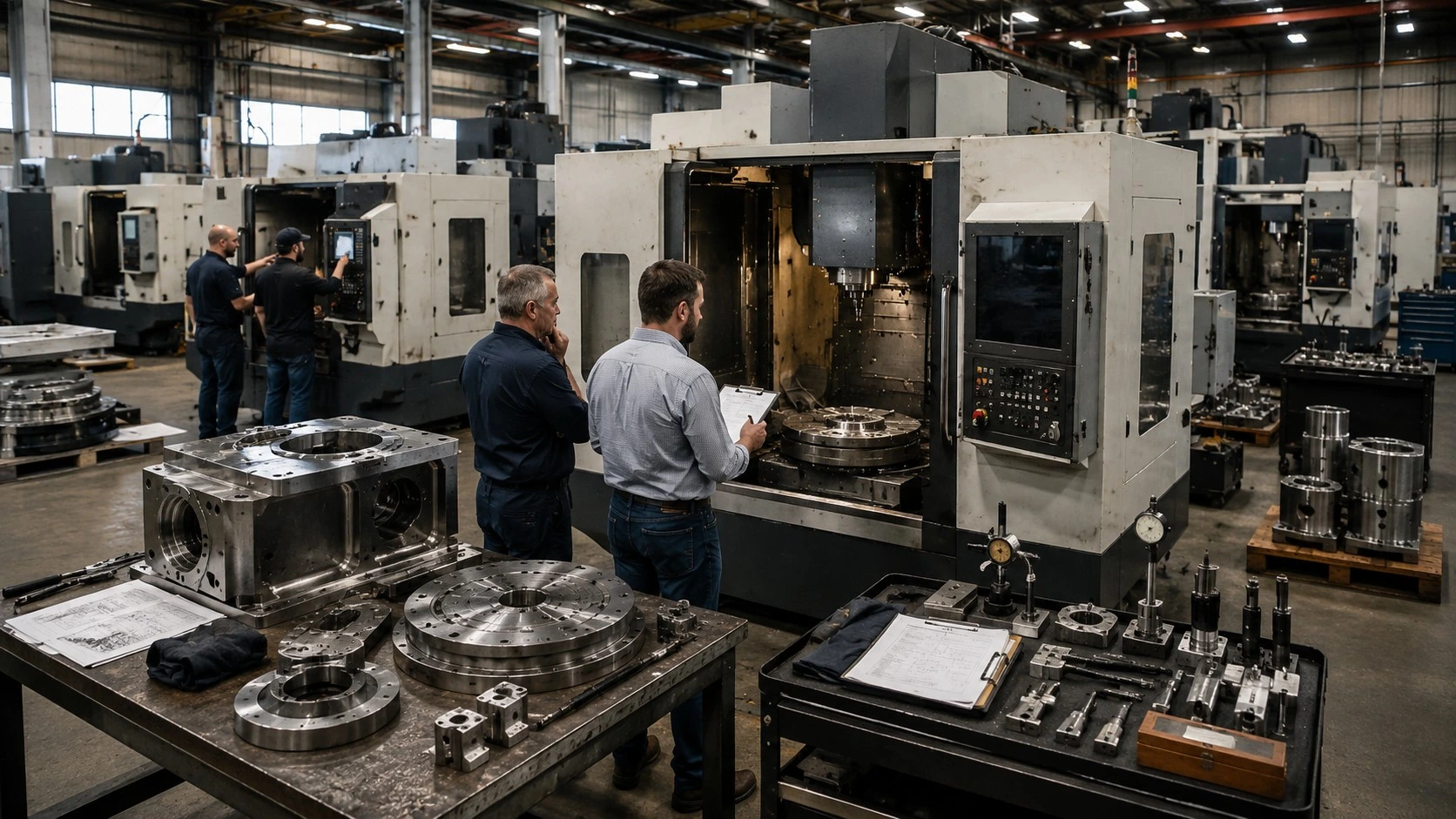
Don’t skip the inspection. Even if the seller seems reputable, spend $1,500-2,500 to have a qualified technician run a full evaluation. They’ll check ball screw backlash, spindle runout, axis positioning accuracy, and pallet repeatability. Those numbers tell you what you’re really buying.

Evaluating Sellers and Machine History

Production hours matter more than age. A 2008 horizontal machining center that ran two shifts in an automotive plant will show different wear than a 2008 machine that ran occasional jobs in a job shop.

Ask why they’re selling. Facility closure and capacity upgrades are normal reasons. If they’re selling because “it never ran right” or “we couldn’t keep it running,” that’s a red flag worth investigating.

Request maintenance records. Well-maintained machines have documentation showing regular PM schedules, spindle services, way lubrication system checks, and control battery replacements.

Summary

  • Used CNC horizontal machining centers deliver pallet-changing automation at 40-60% less than new equipment
  • Spindle condition and pallet changer function are your critical inspection points
  • Match machine size (pallet and taper) to your actual part requirements, not future possibilities
  • Budget for substantial tooling and workholding beyond the machine purchase price

MachineStation’s inventory includes horizontal machining centers from Mazak, Okuma, Makino, Mori Seiki, and other serious production brands—machines we’ve personally inspected and can help you evaluate for your specific application.

FAQs:

1. What are the benefits of using a horizontal machining center (HMC) over a vertical machining center (VMC)?

Horizontal machining centers offer several advantages, including improved chip evacuation, better access to the workpiece for multi-sided machining, and enhanced automation capabilities with pallet changers. These features make HMCs ideal for high-volume production and complex part geometries.

To choose the right used HMC, consider factors such as the size and complexity of the parts you need to machine, the required spindle speed and power, the machine’s age and condition, and any additional features like automation capabilities. Consulting with a trusted dealer like MachineStation can help you find a machine that fits your specific requirements.

When inspecting a used HMC, check for signs of wear and tear, such as spindle runout, axis backlash, and table flatness. Review maintenance records, inspect the control system for updates, and evaluate the overall condition of the machine’s components. A thorough inspection ensures you invest in a reliable machine.

Search for products

Back to Top
Select Language
Product has been added to your cart