Home/Blogs/How to Buy a Used CNC Lathe: Complete Guide for Machine Shops
How to Buy a Used CNC Lathe: Complete Guide for Machine Shops
You’re ready to expand your turning capacity, but a new CNC lathe isn’t in the budget. Buying a used CNC lathe can save you 40-60% compared to new equipment, but only if you know what to look for. Here’s how to buy a used CNC lathe without getting stuck with a machine that costs more to fix than it’s worth.
Start With Your Actual Production Requirements
Don’t shop by price alone. Start with the parts you need to produce.
What’s your maximum swing diameter? What length parts will you run? A Haas ST-20 handles different work than a Mazak Quick Turn 250. If you’re turning 8-inch diameter parts, a 12-inch swing lathe gives you room to work. Too small, and you’ll be turning down jobs. Too large, and you’re paying for capacity you’ll never use.
Think about your spindle speed and horsepower needs too. Aluminum work needs higher RPMs than heavy steel turning. Most used CNC lathes in the 10-15 HP range handle general shop work, but specialized production might need more muscle.
Know Which Control System Your Operators Can Run
The control makes or breaks your learning curve. If your team already runs Fanuc controls, stick with Fanuc when you buy a used CNC lathe. Switching from Fanuc to Siemens or Mazatrol means retraining, new post processors, and lost production time while everyone gets up to speed.
Fanuc controls dominate the used market, which also means better parts availability and more service techs who know the system. You’ll find plenty of used lathes with Fanuc 0i, 18i, or 21i controls.
Older controls aren’t necessarily bad. A well-maintained Fanuc 0T from the early 2000s still runs reliable production. Just make sure you can still get parts and support for whatever control you’re considering.
Inspect the Machine’s Real Condition
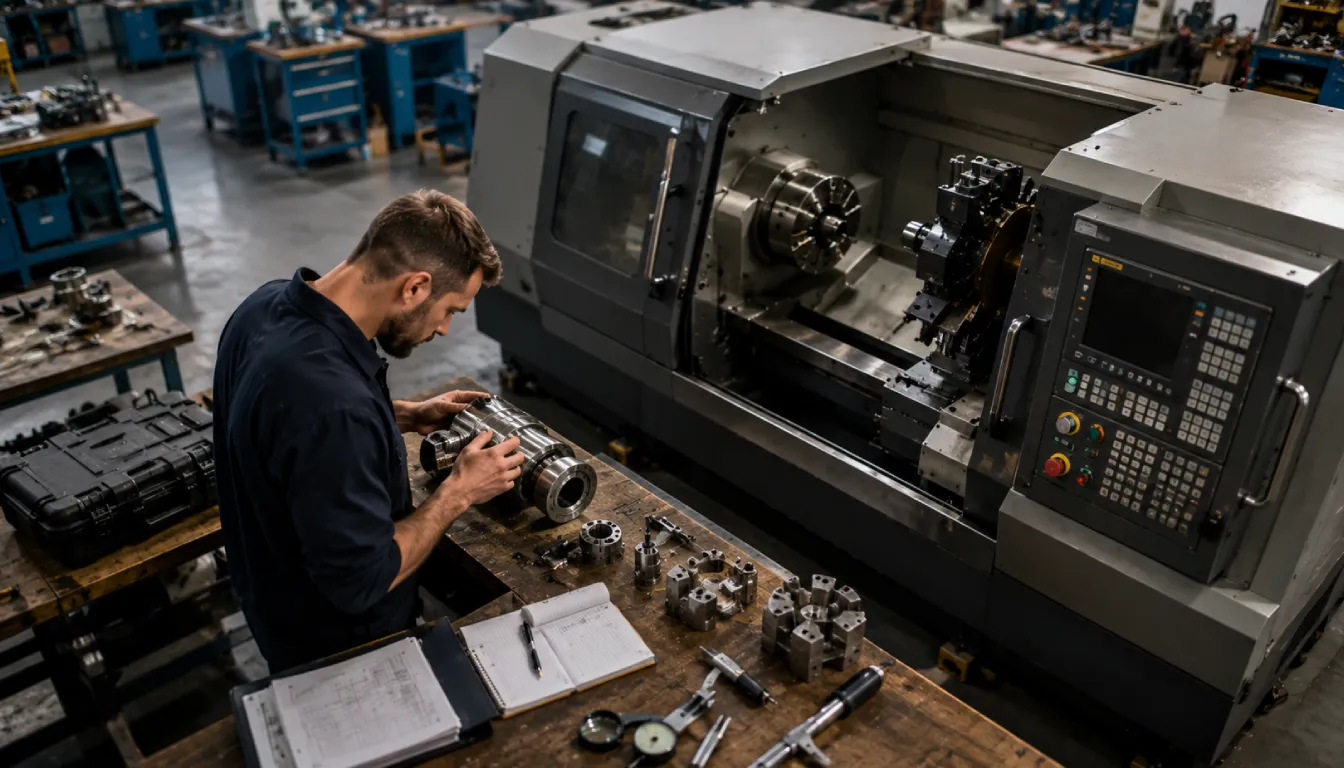
Spindle hours tell part of the story, but not all of it. A lathe with 15,000 hours that ran production parts in a clean shop beats a 5,000-hour machine that sat in a corner for three years.
Here’s what to check when you inspect:
Spindle bearing play: Any noticeable movement means expensive repairs ahead
Way condition: Look for scoring, gouges, or uneven wear on the bed
Chuck condition: A worn chuck costs $2,000-$5,000 to replace
Turret indexing: Should lock precisely with no hesitation
Tailstock alignment: Critical for long part accuracy
Coolant system: Pumps, tanks, and lines should be clean, not clogged with sludge
Ask to see the machine run a test part if possible. Surface finish and dimensional accuracy tell you more than a visual inspection ever will.
Get Clear on What’s Included
When you buy a used CNC lathe, “as-is” can mean different things. Does the price include tooling? What about the steady rest or live tooling attachment? Some sellers strip everything valuable before the sale.
Get a complete list of what transfers with the machine: tool holders, collets, chucks, manuals, maintenance records, and any specialty tooling. A lathe with a full tool setup is worth more than a bare machine.
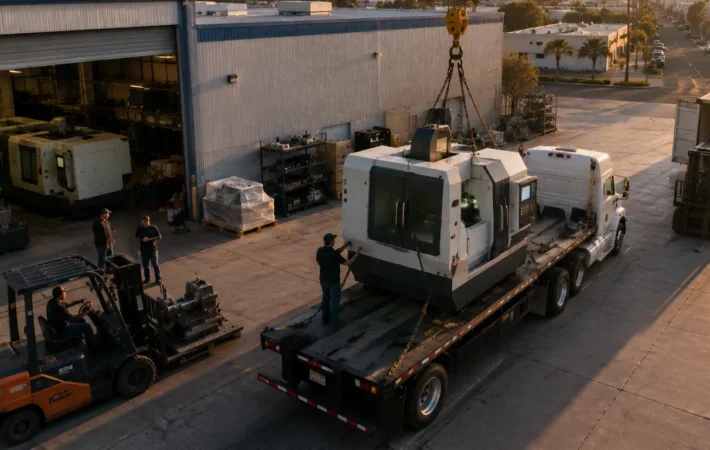
Transportation isn’t cheap either. Moving a 6,000-pound lathe costs $1,500-$4,000 depending on distance and access. Factor that into your total budget when comparing prices.
Common Mistakes That Cost Buyers Money
First-time buyers often focus on the asking price and ignore total cost of ownership. That $25,000 lathe might need $8,000 in immediate repairs, new tooling, and electrical work to match your shop’s power supply.
Don’t skip the inspection to save time. Sellers know when a machine has problems. If they won’t let you inspect it or run test cuts, walk away.
Another mistake: buying more machine than you need because it “seems like a good deal.” A large CNC lathe with sub-spindle and live tooling is only a good deal if you’ll actually use those features. Otherwise, you’re paying for complexity that slows you down.
Watch out for machines that have been sitting unused for years. Seals dry out, ways rust, and controls develop issues when equipment sits idle. A machine in active production until last month is safer than one that’s been in storage since 2019.
Summary
Define your production needs before shopping — swing, length, spindle specs, and control preference
Inspect spindle condition, ways, and accuracy; don’t rely on photos alone
Factor in tooling, transportation, installation, and potential repairs when budgeting
Stick with control systems your team already knows to minimize downtime
MachineStation carries inspected used CNC lathes from Haas, Mazak, Doosan, Okuma, and other major brands, with detailed specs and condition reports to help you buy with confidence.
FAQs:
1. What are the main advantages of buying a used CNC lathe over a new one?
Buying a used CNC lathe offers significant cost savings—typically 40-60% less than new equipment—while still delivering the precision and capacity your shop needs. Many used lathes have proven reliability, with well-maintained machines from brands like Haas, Mazak, Okuma, and Doosan offering years of productive service. You also avoid the long lead times common with new equipment, so you can start turning parts and generating revenue faster. For shops looking to expand capacity without tying up capital, a quality used CNC lathe is a smart, proven investment.
2. How can I be confident in the condition of a used CNC lathe?
Reputable used machinery dealers like MachineStation thoroughly inspect and evaluate each CNC lathe before listing it for sale. Look for dealers who provide detailed machine specifications, spindle hour counts, control information, and high-resolution photos or videos. Many dealers also offer in-person or virtual inspections, maintenance records, and transparent communication about the machine’s history and condition. Financing options and trade-in programs further demonstrate a dealer’s confidence in their inventory. Buying from an established dealer gives you access to expertise, support, and machines that are ready to perform.
3. Can I finance a used CNC lathe, and what are my payment options?
Yes, financing is widely available for used CNC lathes and is a popular option for machine shops looking to preserve cash flow while adding capacity. Many dealers, including MachineStation, work with equipment financing partners who specialize in used industrial machinery. Financing terms typically range from 24 to 60 months, and approval is often faster than traditional bank loans. You can also explore lease options, trade-in credit toward your purchase, or cash deals for additional savings. Financing a used CNC lathe allows you to start generating revenue immediately while spreading the investment over time.