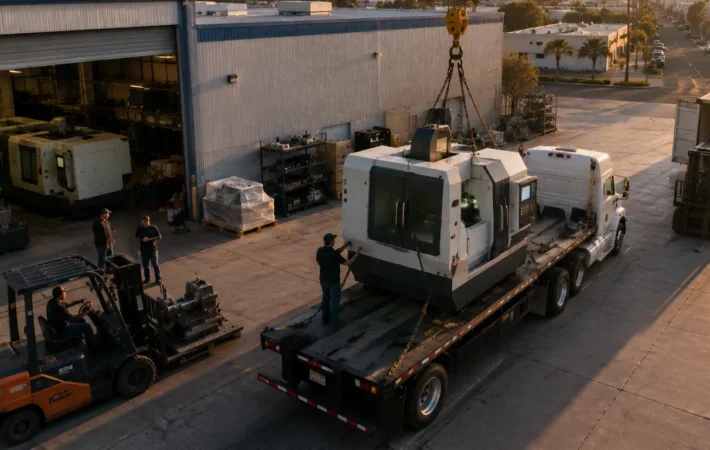
Home / Blogs / How Horizontal Machining Center Pallet Changers Cut Setup Time and Boost Throughput

How Horizontal Machining Center Pallet Changers Cut Setup Time and Boost Throughput

If you’re running high-mix production or job shop work on a horizontal machining center, you already know the problem: every time you stop the spindle to swap parts, you’re losing money. A horizontal machining center pallet changer solves this by letting you load the next job while the current one’s still cutting, which can double your actual spindle time without adding a second shift.
Hmc pallet changer

What a Pallet Changer Actually Does

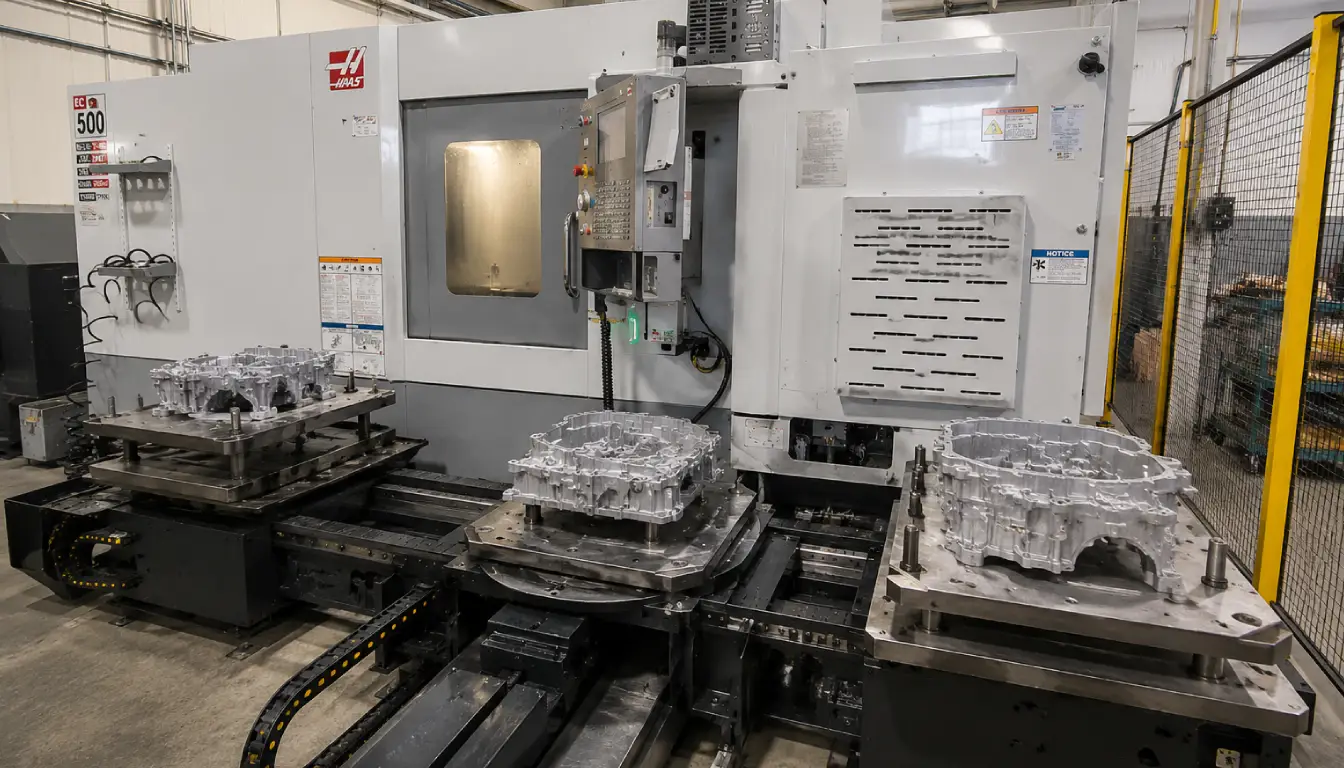
A pallet changer is an automated system that swaps workholding pallets in and out of the machining center while the machine keeps running. You mount your part on a pallet outside the machine, then the changer rotates or shuttles it into position when the current job finishes.

Most horizontal machining centers come with either a two-pallet shuttle system or a rotary carousel that holds four, six, or even more pallets. The two-pallet setup is simpler and takes less floor space. Multi-pallet systems give you more flexibility for batching similar jobs or staging complex setups.

The real advantage isn’t just speed—it’s uptime. Instead of stopping production to fixture a new part, your operator sets up the next job on an offline pallet while the machine cuts. When the program ends, the changer swaps pallets in 15 to 30 seconds, and cutting starts again.

How Much Time You Actually Save

The numbers depend on your part mix and setup complexity, but here’s a realistic example: let’s say your average cycle time is 20 minutes and your manual setup takes 10 minutes. Without a pallet changer, you’re getting 20 minutes of cutting followed by 10 minutes of downtime—that’s 67% utilization.

With a horizontal machining center pallet changer, you eliminate most of that 10-minute gap. Your utilization jumps to 90% or higher because the only downtime is the 15-second pallet swap. Over an 8-hour shift, that’s the difference between 16 parts and 23 parts.

The payoff gets bigger when you’re running smaller lot sizes. If you’re switching setups three or four times per shift, you’re reclaiming 30 to 40 minutes of spindle time every day. That adds up fast, especially if you’re quoting tight delivery windows or trying to justify a second machine purchase.

What to Look for in a Used Pallet System

When you’re evaluating a used horizontal machining center with a pallet changer, pay attention to these details:

  • Pallet count and size: Match the pallet capacity to your typical job queue. A 4-pallet system gives you flexibility without eating up too much floor space.
  • Changer type: Rotary systems are faster and more compact. Shuttle systems are simpler to maintain and easier to retrofit if you’re adding tombstones or custom fixtures.
  • Condition of the indexing mechanism: Check for wear on the locating pins, clamping hydraulics, and rotary bearings. A sloppy pallet change means lost repeatability.
  • Pallet interface compatibility: Make sure the tombstones or subplates you already own will mount to the machine’s pallet system, or budget for new fixturing.
  • Control integration: Older machines sometimes require manual pallet calls. Newer controls handle pallet scheduling automatically and can queue jobs based on priority.

You’ll also want to confirm that the machine comes with enough pallets for your needs. Replacement pallets can run $2,000 to $5,000 each depending on size and brand, so getting a full set with the machine saves you money upfront.

Common Mistakes Buyers Make

The biggest mistake is assuming any horizontal machining center pallet changer will work for your parts. Pallet size matters—if you’re running large castings or multi-op fixtures, a 500mm pallet won’t cut it. You need 630mm or 800mm pallets, and those machines cost more.

Another issue is underestimating fixturing costs. A pallet changer is only useful if you have enough tombstones, vises, or custom fixtures to keep multiple pallets staged. Budget for at least two complete setups per pallet if you’re serious about minimizing downtime.

Don’t ignore the floor space requirement either. A 4-pallet rotary system adds 3 to 4 feet to the machine’s footprint. Make sure you’ve got room for the changer, chip conveyor, and operator access before you commit to a purchase.

Summary

  • A horizontal machining center pallet changer eliminates most manual setup downtime by letting you stage the next job while the machine cuts
  • Two-pallet systems are compact and affordable; multi-pallet systems give you more flexibility for batching and complex setups
  • Expect 90%+ spindle utilization instead of 60-70% with manual loading
  • Check pallet size, changer type, indexing condition, and control integration before buying used
  • Budget for fixturing—you need enough tooling to keep multiple pallets staged

MachineStation carries a rotating selection of horizontal machining centers with 2-, 4-, and 6-pallet systems from brands like Mazak, Okuma, and Doosan, so you can find the right capacity and configuration for your shop.

FAQs:

1. How much does a horizontal machining center with a pallet changer cost?

The cost of a used horizontal machining center with a pallet changer depends on the number of pallets, machine age, brand, and condition. A used HMC with a two-pallet shuttle system typically ranges from $80,000 to $200,000, while multi-pallet rotary systems (4–6 pallets) can range from $150,000 to $400,000 or more for newer or premium brands like Mazak, Makino, or Okuma.

The key is evaluating the ROI: if a pallet changer can increase your spindle utilization from 67% to 95%, the productivity gain often pays for the machine within 12–24 months, especially in high-mix or job shop environments. MachineStation can help you source the right used HMC with a pallet changer configuration that fits your production needs and budget.

A two-pallet shuttle system is simpler, more compact, and ideal for shops running similar parts or straightforward job sequences. It swaps one pallet in while the other is offline for setup, which works well when your cycle times are consistent and you don’t need to stage multiple jobs at once.

A multi-pallet rotary system (4, 6, or more pallets) gives you more flexibility for batching similar jobs, staging complex setups, or running lights-out production with minimal operator intervention. The tradeoff is higher upfront cost and more floor space, but if you’re running high-mix work or need to maximize unattended runtime, the extra pallets can significantly boost throughput.

MachineStation can help you evaluate which system fits your part mix, floor space, and production goals.

A pallet changer makes the most sense when your setup time is eating into your spindle time and you’re running multiple jobs per day. If your average setup takes 10+ minutes and your cycle times are under 30 minutes, a pallet changer can nearly double your actual cutting time without adding a second shift.
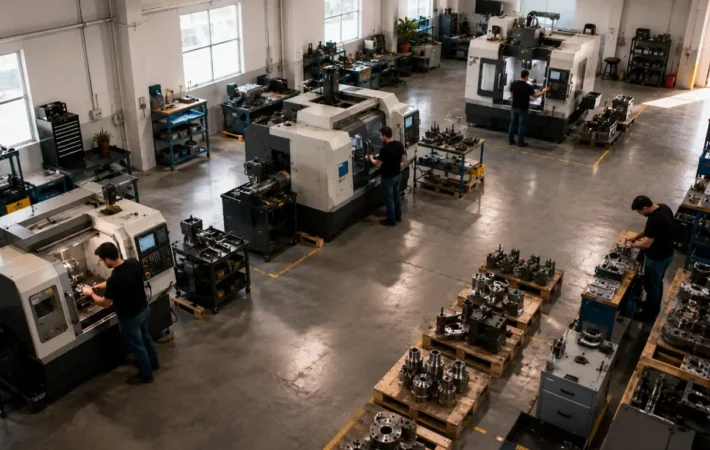
For small job shops running high-mix work, a two-pallet system is often the sweet spot: it’s more affordable than a multi-pallet setup, takes less floor space, and still delivers significant productivity gains. The key is making sure your part mix and volume justify the investment — if you’re running long cycle times (60+ minutes) or only a few setups per week, the ROI may not be there yet.

MachineStation can help you evaluate whether a used HMC with a pallet changer fits your current production needs or if a standard horizontal machining center is a better starting point.

Quick Contact

Please enable JavaScript in your browser to complete this form.
Are you a Reseller?

What is 7+4?

Back to Top
Select Language
Product has been added to your cart
Max · MachineStation
Looking for a machine? I can check live inventory for you. 👋