Home / Blogs / Bridge Mill vs Gantry Mill

Bridge Mill vs Gantry Mill

When doing machining of heavyweight workpieces, there comes two different types of CNC machines, which are the bridge mill and gantry mill. This is one of the most debated topics in the large-scale manufacturing world, which is the bridge mill vs gantry mill. Though both these machines are designed for heavy parts of large sizes, their movement mechanics and structural design, and applications focus differ in meaningful ways. So, understanding the nuances between a bridge mill and a gantry mill is critical for the shop owners, manufacturers, and operators. So, to know the differences between the two types of CNC machines, read this blog till the end.
What is Bridge Mill?

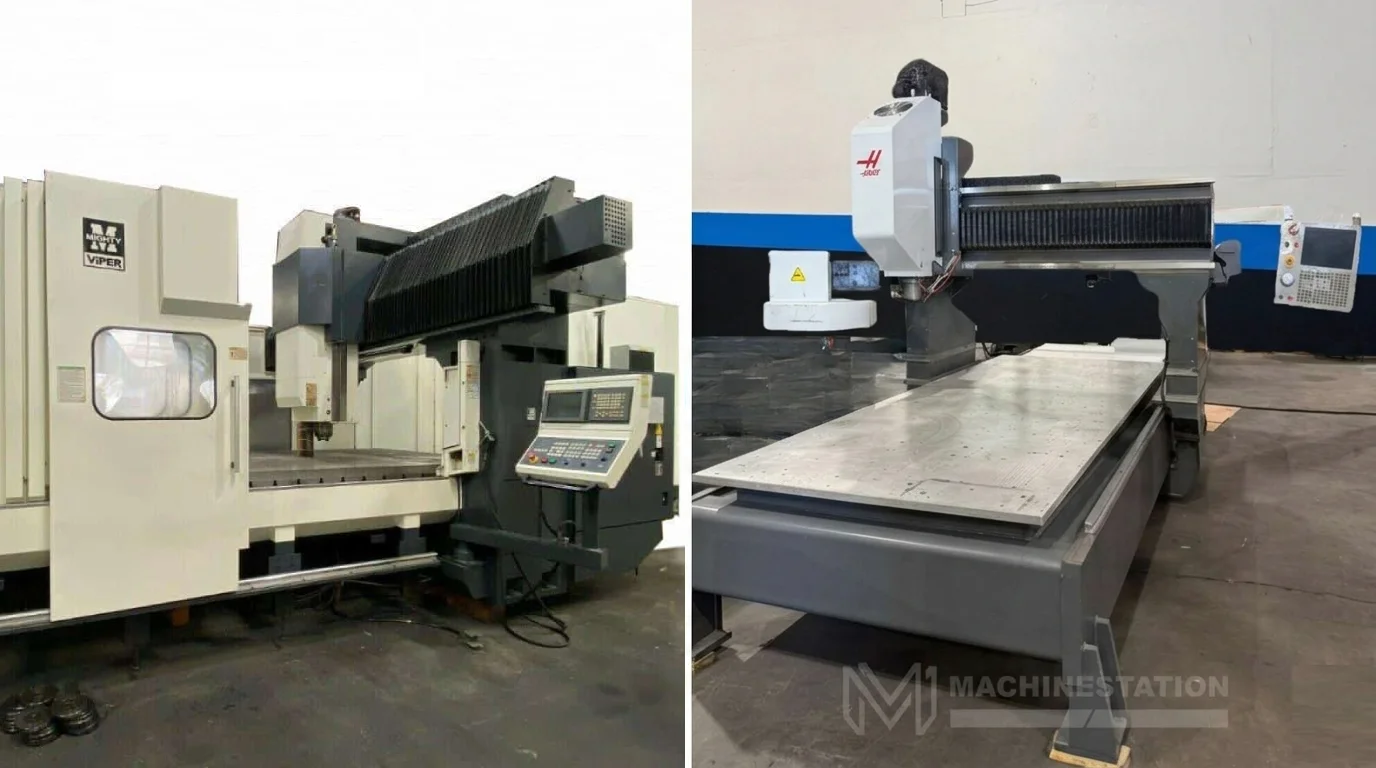
To know the bridge mill vs gantry CNC difference, we need to know the meaning of these two types of CNC machines. Bridge mills are also known as portal mills or double column machining centers. This is a type of CNC machine where the cutting head moves along a fixed bridge structure. The bridge spans across the machine bed, and the workpiece typically sits stationary on the table. Here are the key characteristics of these CNC machines:

  • Moving spindle or ram
  • Fixed bridge structure
  • The table may move in some designs
  • Common in medium to large machining applications

What is Gantry Mill?

The gantry mill features a large, overhead gantry structure, and that gantry carries the spindle. The moving bridge travels over the stationary workpiece. The cutting head is mounted on the gantry, which moves along the rails on either side of the CNC machine. Here are the key characteristics of this type of CNC machine:

  • Large machining envelope
  • Moving gantry structure
  • Stationary workpiece
  • Suitable for oversized parts

Major Differences Between Bridge and Gantry Mill:

1. Structural Design Differences:

One of the major differences between the gantry vs bridge milling machine lies in which component moves: the bridge or the table. 

Structure of the bridge mill:

  • Spindle moves along the X, Y, and Z axes
  • The bridge is fixed
  • The table may move depending on the design

Structure of the gantry mill:

  • Spindle moves along the Y and Z axes
  • Gantry moves along X-axis
  • The table remains fixed

2. Workpiece Handling:

When choosing between these two types of CNC machines, how they handle large parts is a critical factor to analyse for proper understanding of Bridge mill vs gantry CNC difference. For bridge mill:

  • The workpiece may move on the table
  • Easier part repositioning
  • Suitable for moderately large parts

For gantry mill:

  • Workpiece stays stationary
  • Lesser requirement for repositioning
  • Suitable for very large and heavy components, which is one of the main gantry mill advantages

3. Machine Footprint and Space Requirements:

If you are running a small to mid sized manufacturing shop, then the machine’s footprint can be a huge constraint in your path. For bridge mills:

  • They have a more compact footprint
  • Lower ceiling height requirement
  • Easier to install in standard CNC shop layouts

For gantry mills:

  • These machines require more floor space
  • They often require a higher ceiling
  • Needs rail systems and a wider installation area

4. Rigidity and Stability:

Rigidity plays an important role in the overall machining performance, especially when doing heavy cuts. For the bridge mills:

  • Less vibration in certain operations
  • Fixed bridge enhances stiffness
  • Suitable for controlled  machining environments

For the gantry mills:

  • Designed to handle large loads
  • Stability depends on the machine’s build and size
  • Moving the gantry introduces a dynamic force

5. Setup Time and Workflow:

One of the major factors that impacts the overall production output is the setup efficiency of the CNC machines, which we need to discuss. For a bridge mill: 

  • Easier to set up for smaller parts
  • Suitable for mixed production works
  • Faster changeovers

For a gantry mill:

  • Longer setup for large parts
  • Less frequent repositioning 
  • Often used for longer production runs

Which One Should You Choose?

So, here are the final points to help you understand which one you should choose between the bridge mill vs gantry mill. 

Choose a bridge mill if: 

  • Shop space is limited
  • You focus on structural rigidity
  • Your machine medium to large parts
  • You need flexibility for different jobs

Choose a gantry mill if:

  • You need a large machining envelope
  • Workpieces cannot be moved easily
  • Your production involves large scale components
  • You handle large to heavy parts

After understanding both the bridge mill and gantry mill advantages and disadvantages, if you are interested in buying one of them, then check MachineStation’s collection of used bridge-gantry mills

Conclusion: 

Bridge mill and gantry mill are two machines used for heavy duty manufacturing, but they are different in various ways. You need to properly analyse what your daily work looks like and then make the purchase decision of any one type of machine between the two.

FAQs:

1. What is the main difference between a bridge mill and a gantry mill?

The main difference lies in movement. A bridge mill has a fixed bridge with a moving spindle, while a gantry mill has a moving bridge that travels over a stationary workpiece.

Bridge mills are typically easier to maintain because of their simpler structure and accessibility to components.

Bridge mills are often used in job shop environments where flexibility and quicker setups are needed for different part types.

Search for products

Select Language
Product has been added to your cart