Home / Blogs / The Future of AI-Driven Manufacturing: What to Expect by 2030

The Future of AI-Driven Manufacturing: What to Expect by 2030

AI has changed different industries in the world. Tech companies can now get their code written in seconds, marketing companies can now get a video made in seconds, and AI is also helping in detecting human diseases faster and cheaper. All of these show that the world is changing at a rapid pace with the help of AI. The same scenario is visible in the manufacturing world, too. AI in the manufacturing industry is being slowly and steadily adopted across the globe. 

As per a report, the global AI in manufacturing market is experiencing unprecedented growth, with projections indicating an increase from USD 2.6 billion in 2022 to USD 20.8 billion by 2028, representing a robust compound annual growth rate (CAGR) of 45.6%. In this blog, we are going to share with you the major changes you can expect in the Future of AI driven manufacturing by 2030 in the manufacturing world due to emerging AI technologies in manufacturing.
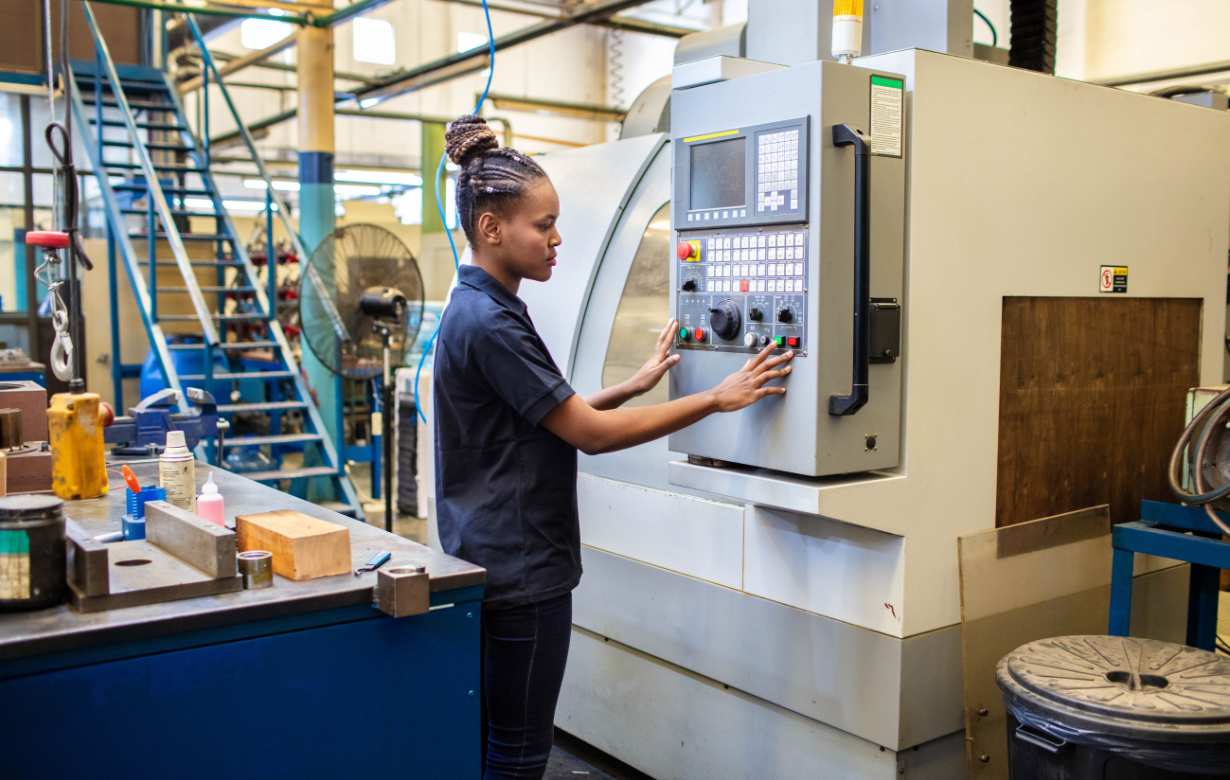
The Future of AI-Driven Manufacturing What to Expect by 2030

Top Changes to Expect in 2030 due to AI driven Manufacturing:

1. Autonomous Smart Factories Operating 24/7 Without Human Presence

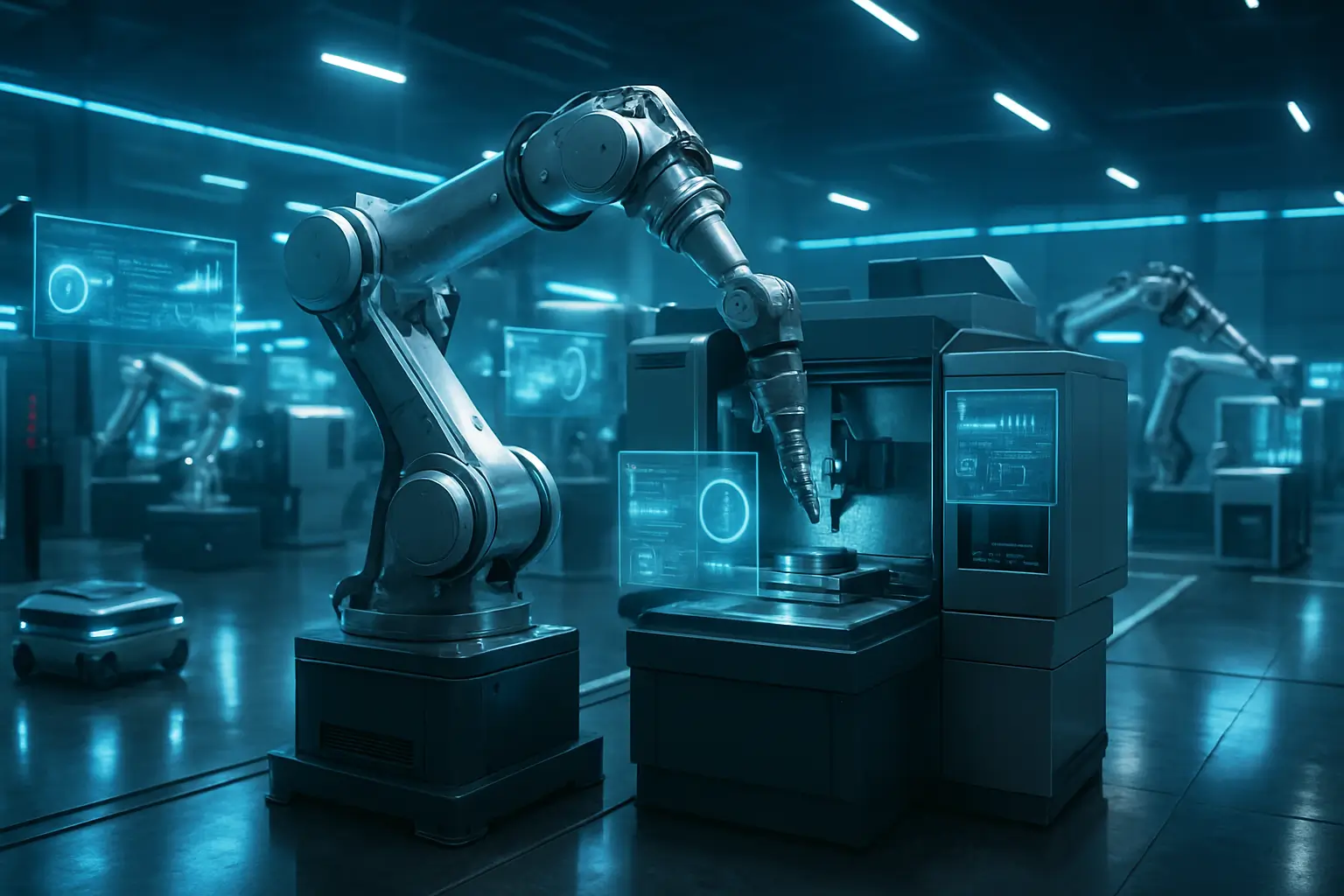
One of the major changes that you can expect in the future of AI-Driven Manufacturing that is definitely going to take place is the normalization of lights out manufacturing. Fully autonomous manufacturing facilities will be the new normal with minimal human intervention. AI-driven systems will manage the entire production process, from raw material setup to finished product output, running continuously and producing repetitive tasks without the need for manual effort. Companies like Tesla and Siemens are already scaling lights out production.

2. Predictive Maintenance Will Reduce Downtime

AI will help manufacturing facilities get the help of predictive maintenance, which will further help in reducing the downtime of CNC machines, increasing the overall productivity of the shop. AI and IoT censors will be common for the majority of the manufacturing shops in 2030. In the smart manufacturing future, machine learning algorithms will be able to track different real-time data like unusual sounds, temperature, vibration, and pressure to understand if there’s any problem with the machine.

3. Generative AI Transforming Product Design

By 2030, generative AI will play an important role in product design and development for CNC machining. Artificial intelligence in manufacturing will lead to the generation of several product design iterations based on different parameters like weight, strength, cost, and material constraints. Airbus has already used generative design to create lightweight aircraft partitions with 45% weight reduction while maintaining structural integrity. Generative AI will also make designing much more accessible by leveraging natural language prompts to create innovative designs, which will reduce the need for programming skills of operators. This will make the future of AI driven manufacturing much more accessible for new operators.

4. Digital Twins Will Optimize Every Process

AI in manufacturing industry is also going to increase the usage of digital twin technology for better optimization of the entire machining process. The digital twins will continuously mirror real world scenarios using data from IoT sensors, which will help the manufacturers get an idea of the real life manufacturing process and predict the outcomes without disrupting the actual production process. In the future of AI driven manufacturing, digital twin technology will also help with continuous process optimization and decrease planning cycles, improving the overall efficiency of manufacturing shops.

5. Cobots Will Be Dominating Shop Floors

One dangerous side of how AI will change manufacturing by 2030 is that a lot of people working in manufacturing shops might lose their jobs to cobots. These collaborative robots, or cobots, will work directly with human beings in CNC manufacturing facilities. Cobots will be able to handle all the repetitive and hazardous tasks while human beings can solely focus on problem solving and complex decision making.

6. AI Driven Supply Chain Optimization Will Transform Logistics

One of the main changes that one can expect in the future of manufacturing 2030 is that AI will transform supply chain optimization, going beyond basic automation. AI systems will be helping the manufacturing business owners in different ways, like analyzing market trends, customer demands, and material availability, and help you dynamically reroute logistics in real-time. AI driven supply chain optimization in maintaining resilience against unexpected challenges, and will also help in the reduction of logistics costs.

7.  Hyper Customization Production Will Increase

Customization of products at a large scale will be another new normal thing due to the adaptation of  AI in manufacturing industry in 2030. Different AI driven design tools, robotic process optimization, and flexible manufacturing systems will allow companies to produce different customized products without sacrificing efficiency. Nike already uses AI to let customers design their own shoes while ensuring efficient production. AI algorithms will understand customer preferences and then generate custom designs, and also help in managing supply chain optimization for just in time delivery of customized products.

Conclusion: 

Artificial intelligence is going to make several changes in the manufacturing industry, and the whole industry is going to look drastically different in 2030 from how it looks right now. Efficiency will increase with the help of AI. Manufacturers will be able to save more costs with less material wastage, less downtime, and save costs on logistics, too. So, if you are looking to jump into the manufacturing industry, you might take the chance now. To start your machining journey, you can check our collection of used CNC machines.

FAQs:

1.Will AI reduce the need for skilled machinists?

Ans: AI is expected to enhance the work of machinists, not eliminate their roles. Skilled operators will still be needed to oversee production, interpret data, handle setups, make adjustments, and manage jobs that require human judgment.

Ans: Predictive maintenance tools may become more common, using machine data to help teams plan service intervals and watch for early signs of component wear.

Ans: Shops can start by adding basic monitoring tools, exploring AI-supported CAM platforms, investing in sensors or probes, training employees in digital skills, and choosing used CNC machines that are compatible with modern retrofit options.

Search for products

SALE ENDS IN:
Select Language
Product has been added to your cart