Home / Blogs / Vertical vs Horizontal Machining Center: How to Choose the Right Configuration for Your Production Floor

Vertical vs Horizontal Machining Center: How to Choose the Right Configuration for Your Production Floor

When you’re speccing out a new machining center for your shop, the vertical vs horizontal machining center decision affects everything from floor space to cycle times to the types of jobs you can realistically bid on. It’s not just about preference — it’s about matching the machine’s strengths to your actual workload.
How Vertical and Horizontal Machining Centers Actually Differ

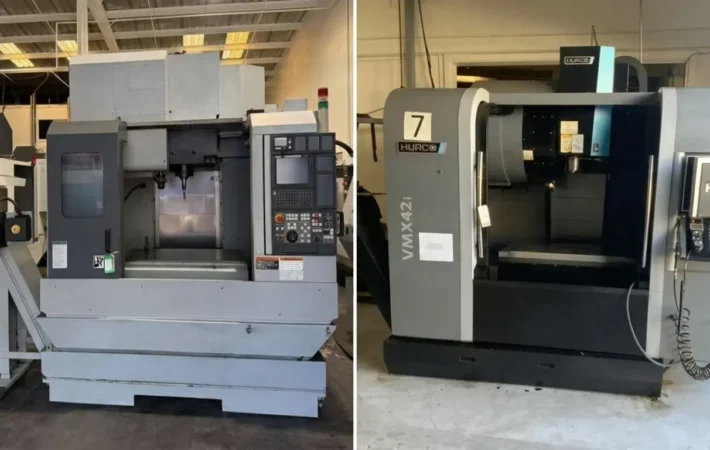
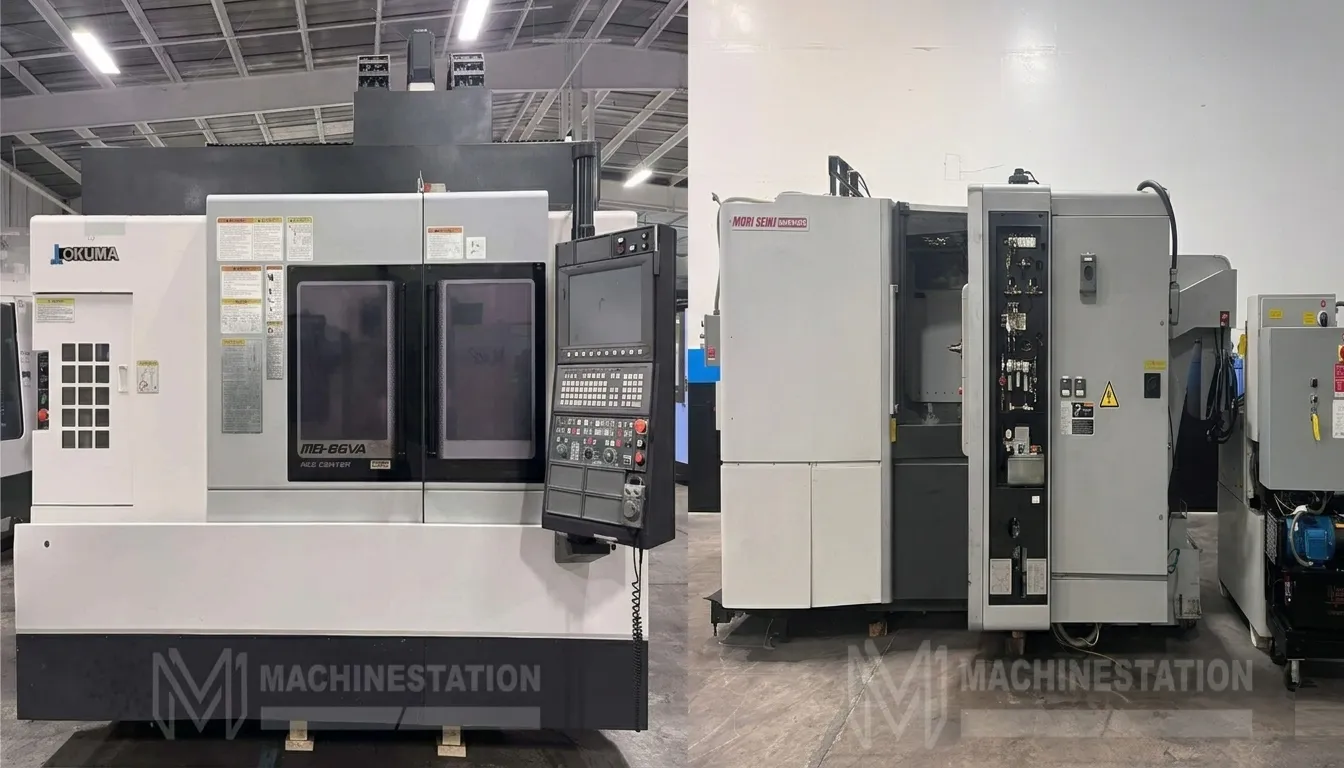
The basic difference is obvious: vertical machining centers (VMCs) have a spindle that moves along the Z-axis pointing down toward the table, while horizontal machining centers (HMCs) position the spindle parallel to the floor.

But that orientation changes how the machine handles chips, how you fixture parts, and how many operations you can complete in one setup. VMCs typically use vises or fixtures mounted directly to the table. You load parts from the top, which makes setup straightforward and visual. HMCs use tombstones or pallets that let you fixture multiple sides of a part at once, and chips fall away from the work instead of piling up on it.

If you’re running high-mix, low-volume work — think job shop environments with frequent changeovers — a VMC gives you faster setup and easier access. If you’re doing medium to high-volume production with complex parts that need four or five-sided machining, an HMC starts to make sense once the numbers justify it.

When a Vertical Machining Center Makes More Sense

VMCs dominate most shops for good reasons. They’re less expensive upfront (you can find solid used 3-axis VMCs starting around $25,000 to $40,000), they take up less floor space, and they’re easier to program and operate if your team isn’t already experienced with horizontals.

You’ll want a VMC if you’re doing:

  • Mold and die work where you need top-down access for deep cavities
  • Prototype and short-run jobs with frequent setups
  • 2D and 3D profiling on flat or moderately complex parts
  • Work that doesn’t require more than three-axis machining in a single setup

The downside is chip management. On deeper cuts or aluminum work, chips pile up on the part and table. You’ll spend more time clearing them, and re-cutting chips can hurt surface finish and tool life. You also lose time if a part needs multiple setups to access different faces.

When a Horizontal Machining Center Pays Off

The vertical vs horizontal machining center question tips toward horizontal when you’re running parts that need machining on multiple sides, especially if you’re making more than 50 or 100 of the same part.

HMCs let you load a tombstone with multiple parts or multiple sides of the same part. The machine runs unattended longer, and you’re not manually flipping parts between ops. Chips fall into the conveyor instead of building up in the cut, which improves tool life and finish quality.

You’ll see the ROI on an HMC when:

  • You’re running production batches where setup time gets amortized over dozens or hundreds of parts
  • Parts need four-sided machining and you’re tired of multiple setups on a VMC
  • You want to run lights-out or minimize operator intervention
  • You’re working with materials that generate a lot of chips (aluminum, cast iron)

The tradeoff is cost and footprint. A used HMC typically starts around $60,000 and climbs fast depending on the pallet system, tool capacity, and control. You’ll also need more floor space and a higher skill level to program and fixture effectively.

What Buyers Miss When Comparing Vertical vs Horizontal Machining Centers

One thing that doesn’t get talked about enough: operator comfort and ergonomics. Loading and unloading parts on a VMC is easier on your team’s backs and shoulders, especially for heavier components. HMCs require more planning around part handling and fixturing, and if your operators aren’t used to thinking in terms of tombstone layouts, there’s a learning curve.

Another consideration is tooling. HMCs often use CAT 40 or CAT 50 tapers and need longer tools to reach around tombstones and fixtures. If you’re switching from vertical to horizontal, you might need to re-tool or at least buy extended-length holders.

Don’t ignore coolant systems, either. HMCs move a lot more coolant and need better filtration since they’re often running longer cycles unattended. Budget for that upfront or you’ll deal with clogged pumps and inconsistent finishes.

Summary

  • VMCs work best for job shops, short runs, and top-down work — they’re affordable, versatile, and easy to set up
  • HMCs excel at production environments where you’re running the same parts repeatedly and need multi-sided access in one setup
  • Chip evacuation and unattended runtime are the hidden advantages of horizontal machines that add up over time
  • Tooling, fixturing, and operator skill level all factor into the real cost of ownership beyond the machine’s price tag

Whether you need a vertical or horizontal machining center depends on your actual production mix, not just what sounds more capable. MachineStation’s inventory includes both configurations across dozens of brands, so you can match the machine to the work instead of forcing your work to fit the machine.

FAQs:

1. What is the main difference between a vertical and horizontal machining center?

The primary difference is spindle orientation and part access.

  • Vertical Machining Centers (VMCs): The spindle is oriented vertically (Z-axis moves up and down). The table is horizontal beneath the spindle. VMCs excel at top-down machining of flat parts, plates, molds, and components where most features are on one face. They’re easier to load, offer better visibility, and require less floor space.
  • Horizontal Machining Centers (HMCs): The spindle is oriented horizontally (parallel to the floor). The table is vertical or tilted, often with a rotary fourth axis or pallet changer. HMCs allow four-sided machining in a single setup, better chip evacuation, and are ideal for high-volume production, tombstone fixturing, and lights-out automation.

Bottom line: VMCs are more versatile and cost-effective for general job shops. HMCs are production workhorses for complex parts requiring multiple setups or automated cells.

Choose an HMC when:

  • You’re running high-volume production of the same part families (automotive, aerospace, energy components)
  • Parts require machining on four or more sides and you want to reduce setups and handling
  • You need pallet changer automation for lights-out manufacturing or unmanned shifts
  • Chip evacuation is critical (heavy roughing, cast iron, long cycle times)
  • You have floor space and budget for a larger, more expensive machine
  • Your parts benefit from tombstone fixturing or multiple-part setups per cycle

Stick with a VMC when:

  • You run high-mix/low-volume work (prototypes, custom parts, mold/die work)
  • Most machining is top-down or single-face operations
  • Setup speed and flexibility matter more than cycle time optimization
  • You have limited floor space or need easier operator access and visibility
  • Budget is tighter — used VMCs cost significantly less than used HMCs

MachineStation insight: If you’re unsure, a used VMC with a fourth-axis rotary table can bridge the gap and give you multi-sided capability without the HMC investment.

Yes — if your production justifies it.

Used HMCs deliver serious ROI when:

  • You’re winning repeat production contracts that require multiple setups on VMCs today
  • Labor costs are eating profit because of part handling and setup time
  • You want to bid on higher-volume work but lack the throughput capacity
  • Automation is part of your growth strategy (pallet changers unlock unmanned production)

Cost reality: A quality used HMC (Haas, Mazak, Doosan, Okuma) with pallet changer runs $80K–$250K depending on age, hours, and configuration — versus $30K–$100K for a comparable used VMC. But the cycle time reduction, setup elimination, and lights-out capability can pay back the premium in 12–24 months on the right work.

MachineStation recommendation: If you’re considering an HMC, talk to us about trade-in options on your current VMC, financing, and machine evaluation. We help shops assess whether an HMC fits their production mix, floor plan, and ROI timeline — and we source machines with verified spindle hours, tooling, and pallets included.

📞 Ready to compare used VMCs and HMCs? Call MachineStation at +1 909-919-9600 or request a quote at https://www.machinestation.us

Search for products

Back to Top
Select Language
Product has been added to your cart