Home / Blogs / Used CNC Vertical Machining Center: How to Find the Right Configuration

Used CNC Vertical Machining Center: How to Find the Right Configuration

Not every vertical machining center is built for the same type of work. Two used VMCs may look similar, but differences in spindle taper, axis travel, table size, tool capacity, and optional features can significantly affect their suitability for a manufacturing operation.

When comparing used CNC vertical machining centers, the goal should be to find a configuration that matches your actual parts, materials, tooling, and production requirements—not simply the machine with the highest specifications.

Here is how to narrow down your options.
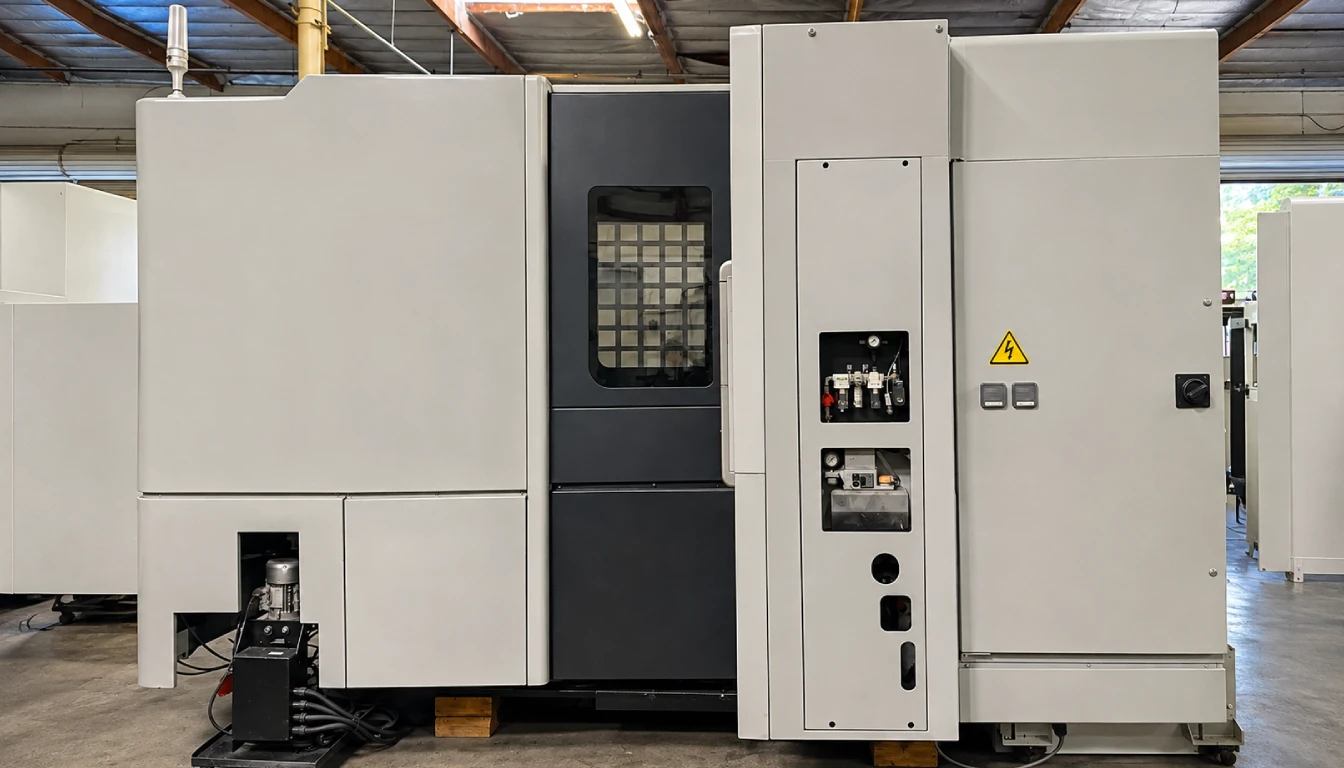
Think About Your Work Before Comparing Machines

Start with the components you plan to manufacture. Consider their dimensions, weight, materials, machining operations, and required tolerances.

For example:

  • Small precision components may benefit from higher spindle speeds.
  • Larger steel components may require a more rigid machine configuration.
  • Parts with multiple machined faces may benefit from a fourth-axis rotary table.
  • Jobs involving frequent tool changes may require a larger tool magazine.

This initial assessment helps eliminate machines that are either undersized or unnecessarily complex for your production needs.

The Configuration Matters: Compare These Five Areas

Rather than comparing machines by brand or price alone, evaluate the following specifications.

ConfigurationWhat to evaluateWhy it matters
Axis travelX, Y, and Z travelDetermines workpiece and fixture capacity
TableDimensions and maximum loadAffects part size and workholding
SpindleRPM, taper, and powerDetermines tooling compatibility and cutting capability
Tool changerTool magazine capacity and typeSupports different machining requirements
Rotary axisFourth-axis readiness or included rotary tableEnables additional machining orientations

A machine with greater axis travel may be useful for larger components, but table size, spindle clearance, and fixture dimensions must also be considered.

40-Taper or 50-Taper: Which Should You Consider?

Spindle taper is an important selection factor when choosing a used CNC vertical mill.

40-taper machines are commonly considered for general-purpose machining, smaller and medium-sized components, and a wide range of everyday milling operations.

50-taper machines are often considered for applications requiring heavier tooling and greater rigidity, depending on the machine’s spindle design and specifications.

The decision should be based on material, cutting strategy, tool dimensions, and production requirements. A larger taper does not automatically mean better performance for every application.

Standard 3-Axis or Fourth-Axis Ready?

A standard three-axis VMC moves along the X, Y, and Z axes. This configuration can handle many milling, drilling, tapping, and pocketing operations.

A fourth-axis setup adds rotary positioning, allowing a workpiece to be presented at different angles. This can reduce manual repositioning and support machining on multiple sides.

Before selecting a fourth-axis-ready machine, confirm:

  • Whether the rotary table is included or sold separately.
  • Whether the machine has the necessary electrical and control options.
  • Whether the required mounting provisions are available.
  • Whether the control supports the intended rotary-axis operation.

Do not assume that a machine advertised as fourth-axis ready includes a rotary table or all required accessories.

Match Spindle Speed to Your Materials

Spindle speed should match the materials, cutter diameters, and cutting tools used in your shop.

A higher-RPM spindle can be useful for certain small-tool and high-speed machining applications. However, it is not automatically the best choice for heavy cutting or every material.

When comparing used VMC configurations, review spindle RPM, horsepower, torque characteristics, taper, and coolant options together.

For example, through-spindle coolant (TSC) may be valuable for certain drilling and deep-hole machining applications. Confirm that the feature is installed and operational rather than relying only on a product description.

Three Questions to Ask Before Shortlisting a Used VMC

Before requesting a quotation or arranging an inspection, answer these questions:

  1. Can the machine accommodate my largest part?

Compare the component dimensions and weight with the table capacity, axis travel, fixture setup, and available clearance.

  1. Does the machine support my existing tooling?

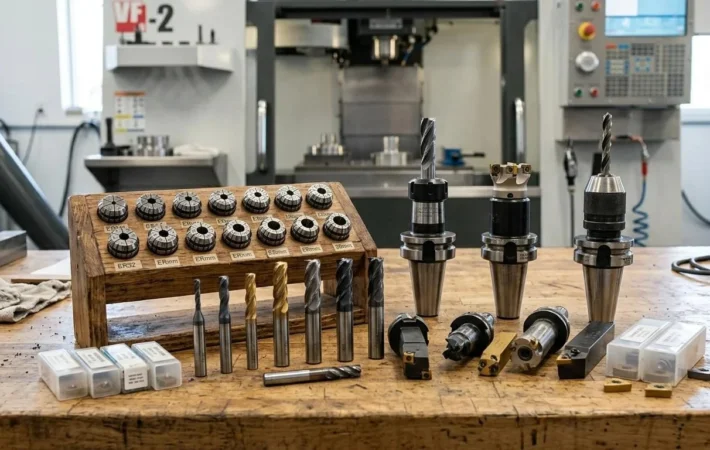
Check spindle taper, tool holders, magazine capacity, and any special tooling requirements.

  1. Are the optional features actually included?

Verify fourth-axis equipment, probing systems, chip conveyors, coolant systems, and other accessories in the individual machine listing and quotation.

Also review the machine’s operating condition, control system, maintenance history, and available documentation before making a purchase decision.

Explore Used CNC Vertical Machining Centers at MachineStation

MachineStation offers a range of used vertical machining centers with different configurations and capabilities.

Browse our used CNC vertical machining center inventory to compare available machines, specifications, and configurations.

You can also explore our used multi-axis CNC machines if your production requires additional machining axes.

Final Takeaway

The right used VMC is not necessarily the machine with the highest RPM, largest table, or most accessories. It is the machine whose configuration matches your workpieces, materials, tooling, and production requirements.

Compare the complete specifications, confirm which options are included, and evaluate the machine’s actual condition before making your decision.

FAQs:

1. What specifications matter most when buying a used CNC vertical machining center?

Axis travel, table dimensions, maximum table load, spindle taper, spindle speed, tool magazine capacity, control system, and machine condition are important factors.

They use different spindle tooling interfaces. A 40-taper configuration is common in general machining, while 50-taper machines are often selected for heavier tooling and certain demanding cutting applications.

Not necessarily. Fourth-axis readiness does not always mean a rotary table is included or that all required control and hardware options are installed.

It depends on the materials, cutting tools, cutter diameter, and machining strategy. Higher RPM is useful for certain applications but is not always necessary.

You can explore MachineStation’s used CNC vertical machining center inventory.

Back to Top
Select Language
Product has been added to your cart
Max · MachineStation
Looking for a machine? I can check live inventory for you. 👋