Home / Blogs / How to Calculate ROI Before Buying a Used CNC Machine

How to Calculate ROI Before Buying a Used CNC Machine

Buying a used CNC machine is an investment in your production capacity. But before making a purchase, it is important to know whether the machine can generate enough additional revenue or savings to justify the investment.

Instead of looking only at the purchase price, calculate the used CNC machine ROI based on the machine’s total cost, expected production, operating expenses, and potential revenue.

A simple ROI calculation can help you compare machines and make a more informed purchasing decision.
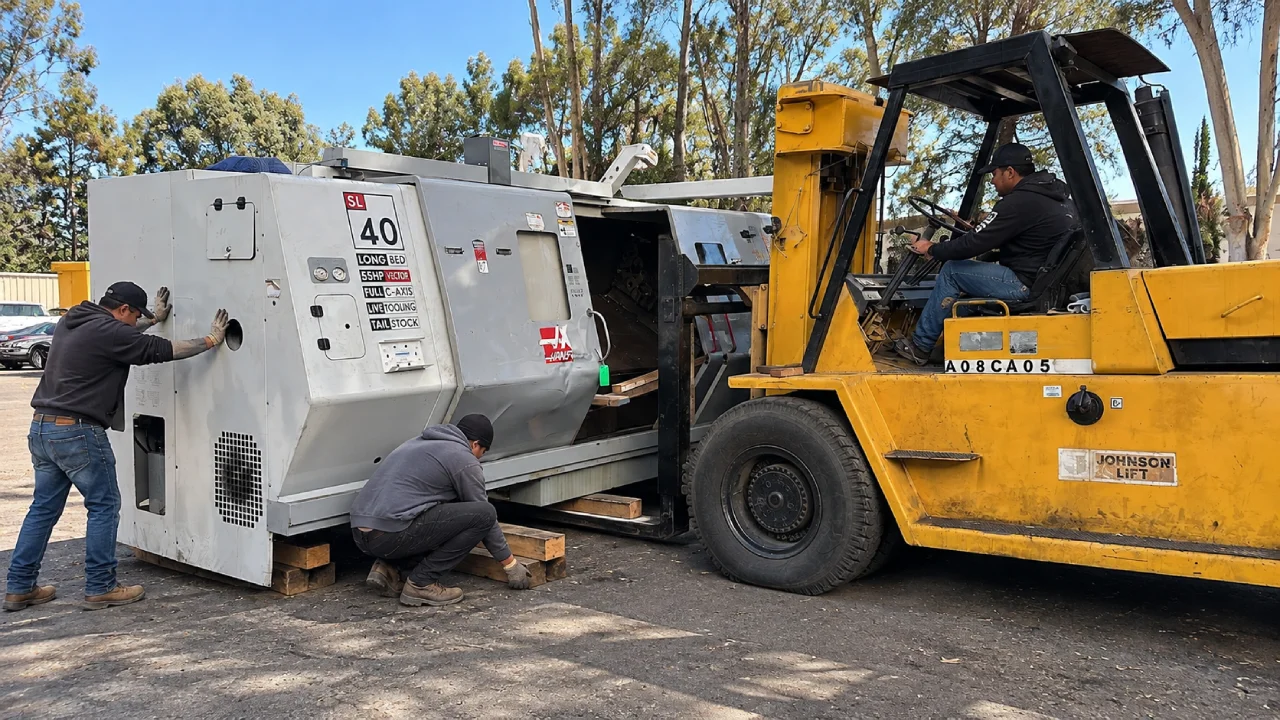
Used CNC Machine ROI: Calculate Your Return Before Buying

What Is Used CNC Machine ROI?

ROI, or return on investment, measures how much financial return you expect from the money invested in a CNC machine.

A basic formula is:

ROI = (Net Return ÷ Total Investment) × 100

For a used CNC machine, the calculation should consider more than the machine’s purchase price.

Your investment may include:

  • Machine purchase price
  • Shipping and rigging
  • Installation
  • Tooling and accessories
  • Repairs or refurbishment
  • Setup costs
  • Operator training

This gives you a more realistic starting point for calculating your CNC machine return on investment.

1. Calculate the Total CNC Machine Investment

Start by determining your actual acquisition cost.

For example:

Machine Price: $80,000
Shipping & Rigging: $6,000
Installation & Setup: $4,000
Tooling & Accessories: $5,000

Total Investment = $95,000

The numbers will vary depending on the machine and your facility.

Before buying, you can explore MachineStation’s used CNC machine inventory and compare machines based on specifications, configuration, and intended application.

For additional guidance, see How to Calculate the Total Cost of Buying a Used CNC Machine.

2. Estimate Your Production Capacity

Next, determine what the machine can realistically produce.

Consider:

  • Parts produced per hour
  • Cycle time
  • Number of operating hours
  • Available shifts
  • Setup time
  • Expected machine utilization
  • Production downtime

Do not assume the machine will operate at 100% capacity.

A realistic production estimate will give you a much more useful ROI calculation.

For example, if a machine produces 10 sellable parts per hour and operates for 1,500 productive hours annually:

10 × 1,500 = 15,000 parts per year

That number can then be used to estimate potential annual revenue or production savings.

3. Calculate Your CNC Production Cost

Your CNC production cost should include the expenses required to manufacture each part.

Depending on your operation, this can include:

  • Labor
  • Electricity
  • Cutting tools
  • Coolant
  • Maintenance
  • Material
  • Programming
  • Machine downtime
  • Consumables

Knowing your production cost allows you to estimate the margin generated by the machine.

For example, if your total production cost is $40 per part and the part generates $70 in revenue:

$70 − $40 = $30 contribution per part

That contribution is more useful for ROI analysis than revenue alone.

4. Estimate Annual Financial Return

Now estimate how much financial benefit the machine could generate each year.

Suppose your machine generates:

15,000 parts × $30 contribution = $450,000 annual contribution

This doesn’t automatically mean your profit is $450,000. You still need to account for other business expenses and realistic utilization.

The goal is to create a reasonable estimate rather than an optimistic projection.

5. Calculate the Payback Period

Another useful metric is the payback period.

Payback Period = Total Investment ÷ Annual Net Benefit

If your total CNC machine investment is $95,000 and the machine generates an estimated annual net benefit of $190,000:

$95,000 ÷ $190,000 = 0.5 years

That is approximately six months.

Payback period can be particularly useful when comparing multiple machines because it shows how quickly your investment could potentially be recovered.

6. Consider Machine Condition and Operating Hours

A machine’s expected ROI depends heavily on its condition.

Before purchasing, review:

  • Operating hours
  • Maintenance history
  • Control system
  • Spindle condition
  • Previous repairs
  • Included tooling
  • Overall machine condition

Operating hours should be considered alongside maintenance records rather than used as the only measure of machine value.

Read Used CNC Machine Operating Hours: What Do They Really Tell You? before evaluating a machine.

You can also review Used CNC Machine Control Systems: What Buyers Need to Know if the machine’s controller is an important part of your decision.

7. Compare ROI, Not Just Purchase Price

A lower-priced machine isn’t automatically the better CNC machine investment.

Consider two machines:

Machine A

  • Lower purchase price
  • More repairs required
  • Older control
  • Additional tooling needed

Machine B

  • Higher purchase price
  • Better condition
  • More suitable tooling included
  • Less expected downtime

Machine B could potentially produce a better return despite its higher initial cost.

That’s why comparing used CNC machine profitability requires looking at the complete financial picture.

Calculate ROI Before You Buy

Before purchasing a used CNC machine, estimate:

Total Investment → Production Capacity → Production Cost → Annual Net Benefit → Payback Period → ROI

The calculation will never be perfectly predictable because production demand, utilization, maintenance, labor, and market conditions can change.

However, a realistic ROI estimate gives you a stronger basis for deciding whether a machine fits your business.

If you’re currently evaluating equipment, explore used CNC machines for sale at MachineStation and review each machine’s specifications before making your investment decision.

The best used CNC machine isn’t necessarily the cheapest one. It’s the one that makes financial sense for your production requirements.

FAQs:

1. How do you calculate used CNC machine ROI?

Use the formula ROI = (Net Return ÷ Total Investment) × 100. Include purchase, shipping, installation, tooling, repairs, operating expenses, and expected financial return.

The investment can include the machine price, shipping, rigging, installation, tooling, accessories, repairs, setup, and other acquisition expenses.

Divide the total machine investment by the expected annual net financial benefit.

Production capacity, machine utilization, labor, tooling, maintenance, downtime, material costs, selling price, and machine condition can all affect profitability.

No. The better investment depends on the machine’s expected production, condition, operating costs, useful life, and potential return—not simply its purchase price.

Back to Top
Select Language
Product has been added to your cart
Max · MachineStation
Looking for a machine? I can check live inventory for you. 👋